
4 February 2026

This article is part of the Signals over Noise newsletter also accessible on LinkedIn.
We're diving into a recent BCG interview with Mark Dipko, Ford’s Head of EV Product Marketing and Strategy.
At Auteneo, we talk a lot about "Noise"—the polished, high-level reports that say everything and nothing. Ford's approach, however, reveals some genuine "Signals" that most OEMs are still ignoring, particularly in emerging markets like Southeast Asia.
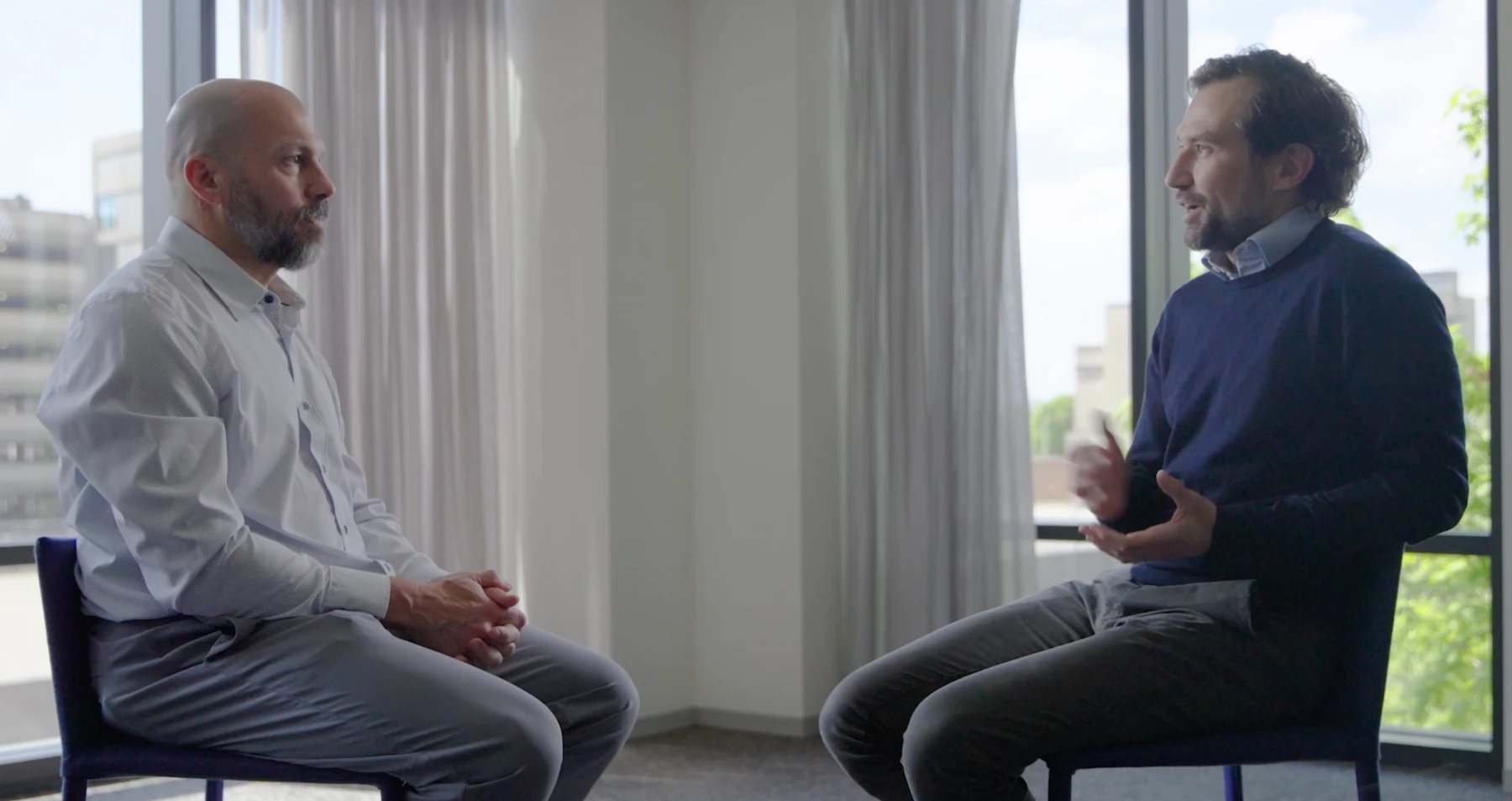
On the left: Mark Dipko, Ford; On the right: Rob Grosvenor, BCG
Let’s look at what Mark Dipko says (selected quotes):
Signal 1: What Owners Think is Different From What Shoppers Think
"...when we would talk to EV intenders, we saw this completely different perception of electric vehicles, and we saw this big difference, this big chasm between what an intender thought and what an owner thought."
The chasm between EV intenders and EV owners is almost inevitable. Our own Auteneo dataset reveals two things. On one hand, public discussions by owners about cars can get negative about specific attributes, be it related to a specific feature, aftersales, or costs. On the other hand, most car buyers, overall, are happy after purchase. They've spent a large sum, the car is new, excitement is high — and psychologically, it’s easier to commit to the decision than to keep questioning it. Loyalty often forms after ownership begins. Before purchase, it’s the opposite: uncertainty dominates, options feel overwhelming, and every unanswered question carries weight.
This is why separating the two groups is essential for accurate market insights. Of course, owner reviews and word-of-mouth do influence shoppers' perceptions. This means research design must separate the two groups deliberately, while also tracking how owner narratives migrate into intender assumptions.
Signal 2: Beware the Survey Trap
"You have what they say in the surveys, but then we actually use data to understand what they were really doing and what the reality was."
Dipko is stating a need for another separation, this time between stated opinion and observed behavior. I previously touched on this in "Customer Surveys - Half True or Totally Wrong?" and "Connected Cars Deserve Better Than Disconnected Surveys". What people say in surveys is often not reality. Sometimes this is due to poor question design; other times, it's because survey creators overestimate what surveys can actually measure.
Yet this is still widely misunderstood. Many still treat survey responses as if they were insights. They aren’t. At best, surveys capture beliefs, intentions, or socially acceptable answers. They do not capture trade-offs, stress, or what people do when real money and real inconvenience are involved.
When survey answers are mistaken for truth, strategies are built on artificially created narratives rather than real behavior. And this can lead to a dangerous illusion of certainty that is a first step to making real commercial mistakes.
Signal 3: Charging Anxiety Beats Range Anxiety
"The top one [insight] that I think was really important was everyone's focused on range and kind of range anxiety, but what we really kind of talked about is, it's charge anxiety."
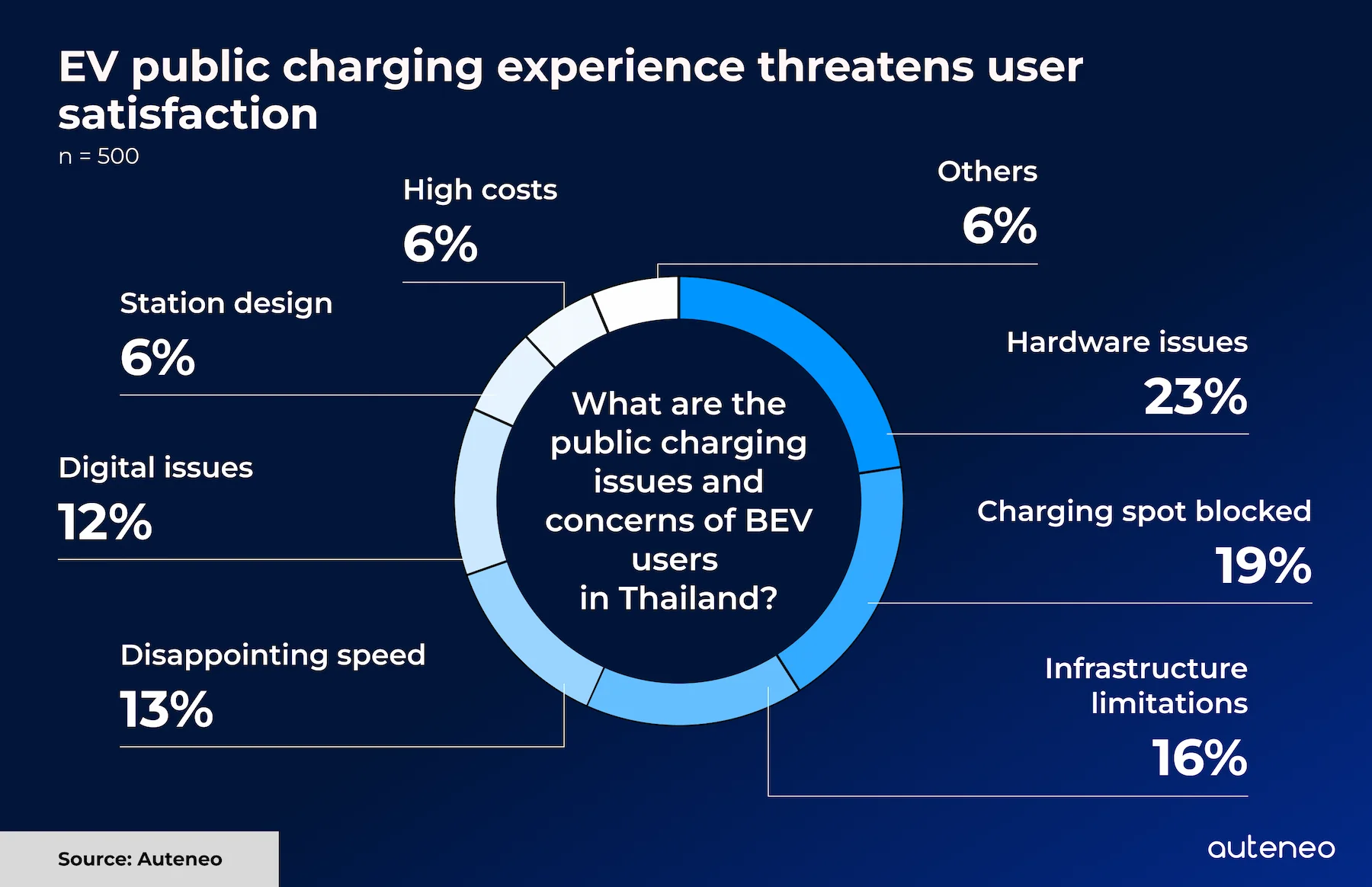
Historically, two topics have been among, if not the most popular when it comes to EVs: battery range itself and whether there will be enough public chargers to manage the anxiety related to the typically lower range of EVs when compared with ICE vehicles. Dipko mentions "charge anxiety" as being more important and while in the interview he focuses on home charging and actions Ford took to help customers with the home charging experience, Auteneo data indicates that public charging anxiety is as important, if not more so. In fact, discussions related to public charging in Thailand are nearly twice as common as those related to home charging.
The reality is that once the mass market EV segment crosses a certain battery-range threshold — which in warmer climates we largely have — and the country achieves reasonable public charging coverage, range stops being the primary concern. That doesn’t mean anxiety disappears. It just shifts. For the vast majority of EV owners, the task of reaching a public charger in an easy enough way is completely manageable with little planning.
What’s far less controllable is what happens after you arrive (as presented in "A Deep Dive into Public EV Charging Issues and Concerns in Thailand"). Will the charger work? Will the app authenticate? Will the station be occupied or blocked? Will charging take the time you planned for? Those uncertainties define the real charging experience. And that’s why focusing on “range anxiety” alone is a classic example of market research measuring what’s simple rather than what actually shapes ownership reality.
Signal 4: Give the Showroom Ammunition
"One of the keys to that [record EV sales growth] was engaging our dealer network early in this. (...) This gave the salespeople something to talk about that was different than our competitors. And it was something that was very compelling. It was really addressing what the customers' pain points were right up front and giving them the confidence to go ahead and buy that electric vehicle."
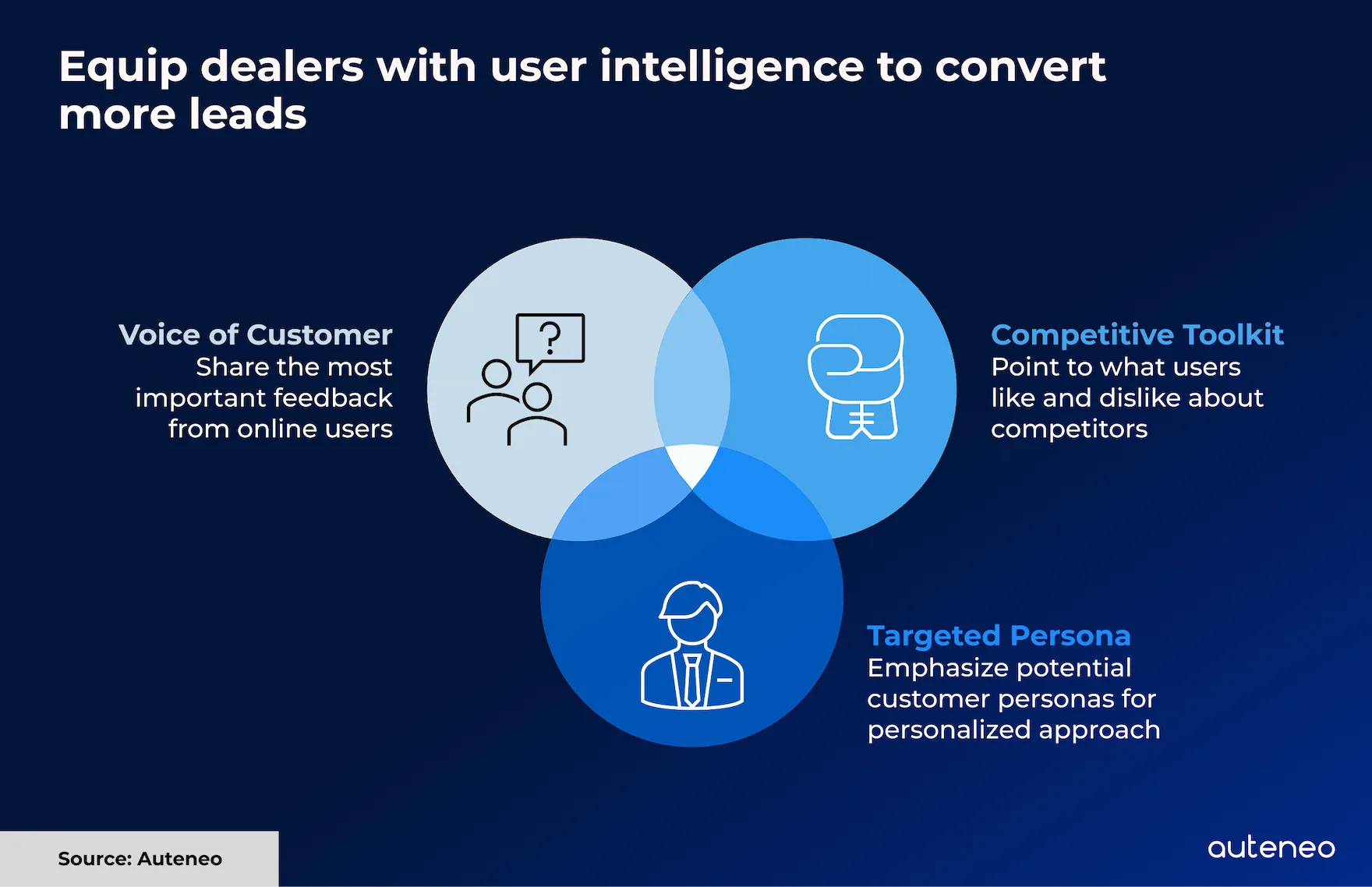
There is a common and a structural disconnect at most OEMs where dealer network management is typically siloed from marketing and customer research. Insights about real customer concerns, actual ownership feedback, and how those concerns compare across brands rarely make it to the showroom floor in a usable form.
As a result, sales staff are trained on spec sheets and brochures — not on the questions customers are actually struggling with. That’s a missed opportunity. Fact-based reassurance, grounded in ownership data, can be far more effective than another range figure or feature list. It helps defuse exaggerated fears and shifts the conversation from technology to experience. It also shows that the brand really cares about the shopper's experience at the dealer.
The reason this matters is simple: most OEMs still don’t do it. Which means that turning market insight into sales enablement — early and deliberately — remains a genuine source of competitive advantage for those willing to break the status quo.
Signal 5: Data Doesn't Equal Insight; Insight Doesn't Equal Action
"I think number one [reflection] is making sure that you're not just looking at data, but you're driving towards insights [...]. Let's do the analytics, but let's try to understand the motivation. And then second is being able to use those insights to drive strategy and move very quickly to implementation."
In the current age, data, analytics, and dashboards are table stakes. Insight only exists when you can explain why people behave the way they do — and when that explanation is strong enough to change decisions.
In practice, this is where most organizations fail. They stop at analysis, confuse pattern recognition with understanding, and then wonder why strategies move slowly or miss the mark. Motivation is harder to extract than metrics, but without it, analytics rarely survive first contact with reality.
The second part matters just as much. Insight that doesn’t translate into action is indistinguishable from noise. What Ford seems to have done well is not just separating signal from data, but shortening the distance between learning something and acting on it. That combination — behavioral understanding plus speed — is still rare, especially in smaller markets such as Southeast Asian countries, and arguably is the real benchmark other OEMs should be measuring themselves against.
The Bottom Line
What emerges from Mark Dipko’s comments isn’t a clever framework, but a discipline. Most companies still blur the lines between belief and behavior, data and insight, learning and action, which explains why a lot of market research done feels like it wasn't worth the resources.
Whether Ford’s approach should be the default in all circumstances is an open question — but it shows how deliberate, evidence-led methodology can help move commercial outcomes in the right direction.